
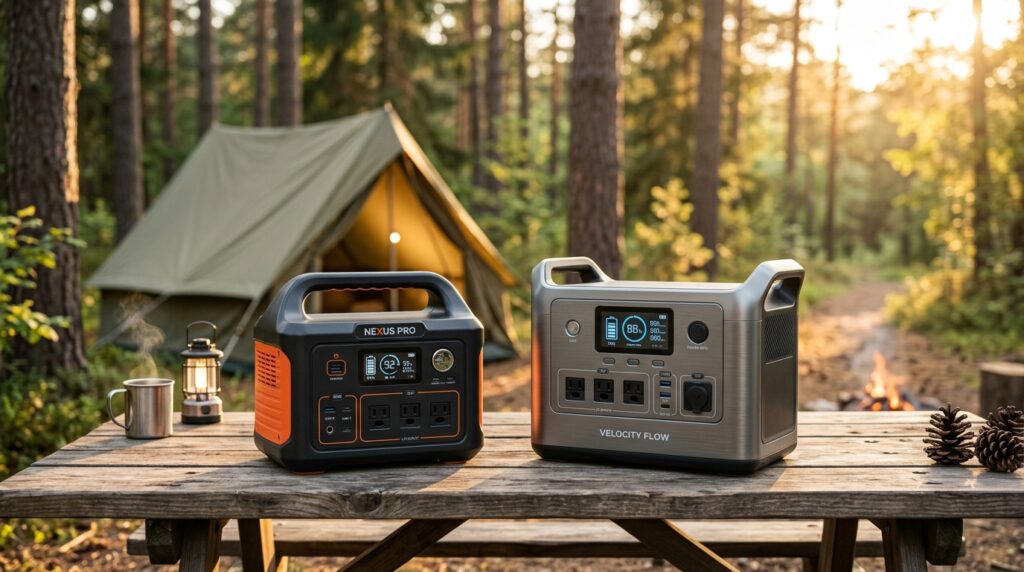
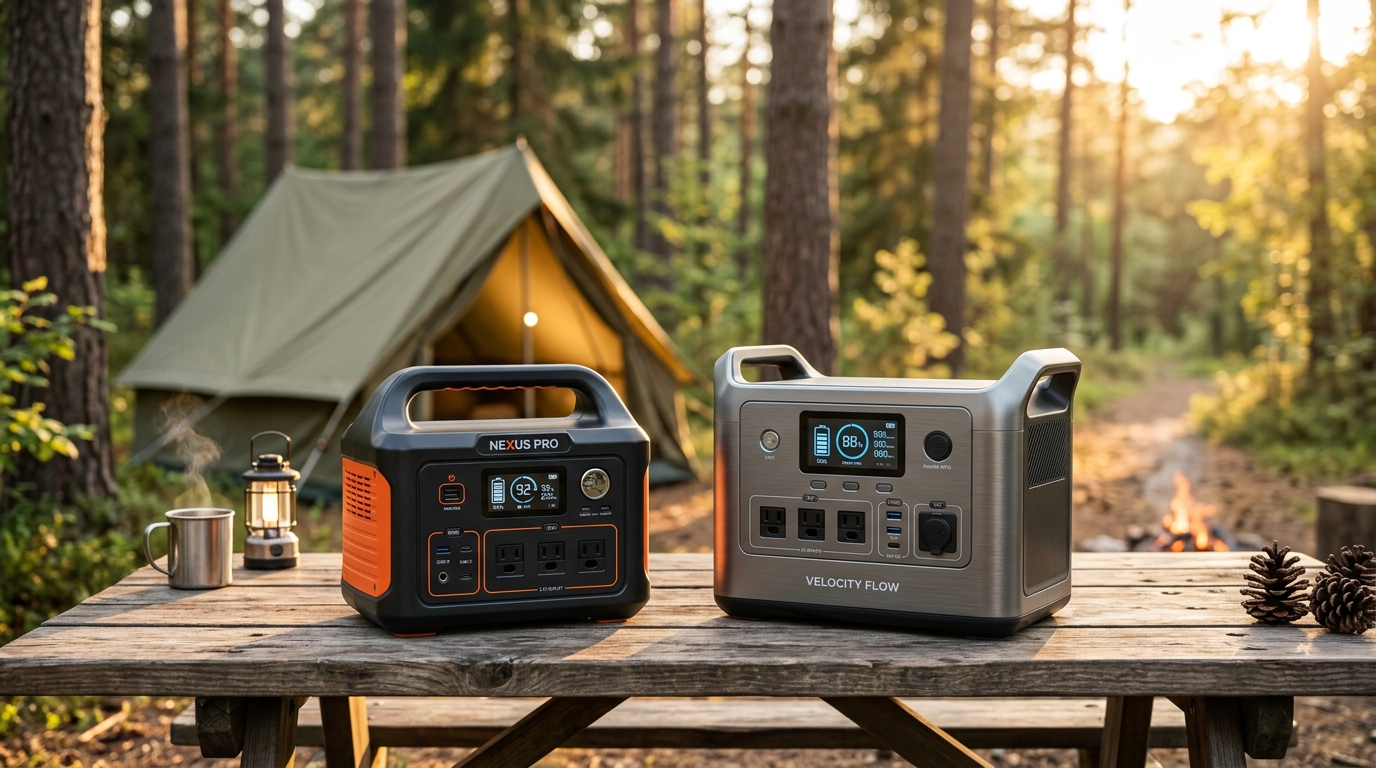
When preparing for home power outages or packing for an extended camping trip, a 1,000Wh portable power station represents the “sweet spot” of capacity and portability. In this category, two giants stand head-to-head: the newly updated Jackery Explorer 1000 v2 and the industry favorite EcoFlow Delta 2. Both leverage modern, safe LiFePO4 battery chemistry, but they differ significantly in charging speed, power output, and physical footprint. This detailed comparison will help you decide which one deserves a spot in your emergency backup kit.
Technical Specifications Comparison
| Specification | Jackery Explorer 1000 v2 | EcoFlow Delta 2 |
|---|---|---|
| Battery Capacity | 1,070Wh | 1,024Wh |
| AC Output Power | 1,500W continuous (3,000W surge) | 1,800W continuous (2,700W surge) |
| Battery Life Cycles | 4,000 cycles to 70% capacity | 3,000 cycles to 80% capacity |
| AC Charging Time | 1 Hour (Ultra-fast AC) | 1.3 Hours (80 minutes) |
| Max Solar Input | 400W | 500W |
| Weight | 23.8 lbs (10.8 kg) | 27 lbs (12 kg) |
| Warranty | 5 Years | 5 Years |
1. Battery Capacity and Longevity
Both power stations utilize premium LiFePO4 (Lithium Iron Phosphate) battery chemistry, which is inherently safer and lasts significantly longer than older Lithium-ion alternatives. However, the Jackery Explorer 1000 v2 takes the lead in lifespan. It is rated for an exceptional 4,000 cycles to 70% capacity, compared to the EcoFlow Delta 2’s 3,000 cycles to 80% capacity. In terms of capacity, Jackery offers a slightly larger reservoir at 1,070Wh compared to EcoFlow’s 1,024Wh, though the real-world usage difference is minimal.
2. Power Output and Portability
If you need to run heavy-duty appliances like electric grills, hairdryers, or power tools, the EcoFlow Delta 2 holds a clear advantage with its 1,800W continuous output (expandable to 2,200W with X-Boost). The Jackery 1000 v2 is rated for 1,500W continuous, which is still plenty for critical home appliances like refrigerators and CPAP machines, and actually offers a higher peak surge capacity of 3,000W (compared to EcoFlow’s 2,700W surge).
However, where Jackery loses slightly on output, it wins on portability. The Jackery 1000 v2 is 20% smaller and over 3 pounds lighter than the EcoFlow Delta 2, featuring a highly ergonomic fold-down handle that makes packing it into a vehicle or carrying it around a campsite much easier.
3. Charging Performance
Fast charging is crucial when you need to top off your power station between rolling blackouts. The Jackery 1000 v2 utilizes ChargeShield 2.0 technology to achieve a full charge from a wall outlet in just 1 hour. The EcoFlow Delta 2 is slightly slower, requiring about 1.3 hours (80 minutes) for a full charge, though it can reach 80% charge in a rapid 50 minutes.
For solar recharging, the EcoFlow Delta 2 supports up to 500W of solar input, while the Jackery 1000 v2 maxes out at 400W. If you plan to run entirely off-grid using large solar arrays, the EcoFlow will top up slightly quicker under optimal sunlight.
Pros and Cons
Jackery Explorer 1000 v2
- Pros: Faster 1-hour AC charging, lighter and more compact form factor, longer 4,000-cycle battery lifespan, folding handle.
- Cons: Lower 1,500W continuous AC output limit, slightly lower solar input limit (400W).
EcoFlow Delta 2
- Pros: Higher 1,800W AC output (runs larger appliances), higher 500W solar charging limit, expandable capacity.
- Cons: Heavier (27 lbs) with fixed handles, shorter cycle life rating (3,000 cycles).
Final Verdict: Which One Should You Choose?
Choose the Jackery Explorer 1000 v2 if portability, battery longevity (4,000 cycles), and ultra-fast 1-hour AC charging are your top priorities. It is the ultimate choice for campers and casual backup power.
Choose the EcoFlow Delta 2 if you need to run high-wattage power tools or appliances that draw more than 1,500W, or if you plan to expand your system’s capacity with extra batteries in the future.
Related Articles
- Jackery Solar Generator 1000 v2 Review
- What Size Power Station Do You Need to Run a Refrigerator?
- Bluetti Solar Generator Price Guide

Mr. Jahangir Alam is an Electrical & Electronics Engineer with a wide range of experience in several fields of Engineering. He finds engineering articles to be very interesting, and that is why he likes to write them. To know more about him, please click here.